You’ve picked a paint color. Maybe a warm white, a cool greige, or a bold navy for the island. Then someone asks: “What sheen do you want?”
That question trips up more homeowners than the color itself. Satin or semi-gloss for kitchen cabinets? The answer isn’t as simple as one being universally “better.” It depends on your kitchen’s lighting, your cabinet material, how often you cook, and whether you have kids dragging sticky fingers across the lower cabinets.
Ocala Painting Pros helps Central Florida homeowners choose cabinet coatings and finishes based on how the kitchen is actually used-not how a paint chip looks under fluorescent store lighting. In Florida’s humidity, proper preparation, the right cabinet paint, and adequate curing time matter just as much as sheen.
This guide breaks down everything you need to know about the best paint finish for kitchen cabinets so you can make a confident decision.
Key Takeaways
- Satin and semi-gloss are the two best sheens for most kitchen cabinets. Both work well when paired with a quality cabinet-grade coating.
- Satin finish gives a softer, more modern look and hides minor flaws, fingerprints, and brush marks better than semi-gloss.
- Semi-gloss finish is the most popular choice for high-traffic kitchens because it looks brighter and is a bit easier to clean.
- Prep, primer, and cabinet-grade coatings like Benjamin Moore Advance or Sherwin Williams urethane trim enamels matter as much as sheen selection.
- Ocala Painting Pros helps Ocala, FL homeowners pick the right cabinet sheen for their lighting, cabinet material, and daily use.
What Is the Best Paint Finish for Kitchen Cabinets?
Satin or semi-gloss is usually the best paint finish for kitchen cabinets. Satin offers a low-sheen, soft glow that hides minor surface imperfections, while semi-gloss reflects more light and cleans slightly easier. The right paint sheen depends on your kitchen’s traffic level, lighting, cabinet color, and the condition of the existing painted surface.
There is no single best sheen for every kitchen. Here’s what matters:
- Both sheens perform best when used with cabinet-specific coatings. Products like Benjamin Moore Advance and Sherwin Williams Emerald Urethane Trim Enamel are designed to cure hard, level smooth, and resist chipping on cabinet doors.
- High gloss and matte finishes are specialty choices. High gloss works for ultra-modern, factory smooth gloss cabinets but shows every flaw and requires perfect prep. Matte kitchen cabinets offer a very soft, design-forward look but absorb light and are harder to keep clean.
- Avoid flat or matte finishes for kitchen cabinets unless they are specially formulated for high-use surfaces. Flat paints absorb grease and stains, making them difficult to clean.
What Is Satin Finish for Kitchen Cabinets?
Satin finish is a soft, low-to-medium sheen cabinet paint that bounces light gently without looking shiny. It sits between a matte finish and semi-gloss on the sheen scale, giving just enough sheen for a polished, “finished” look without harsh glare.
Most modern painted kitchen cabinets featured in design publications use satin or close-to-satin cabinet sheens. Satin is often the default for factory finish options on painted cabinet doors from many manufacturers.
Matte finishes absorb light and offer a soft appearance, but true matte cabinets are more prone to showing oils and fingerprints and are harder to clean than satin finishes.
What Does Satin Look Like on Kitchen Cabinets?
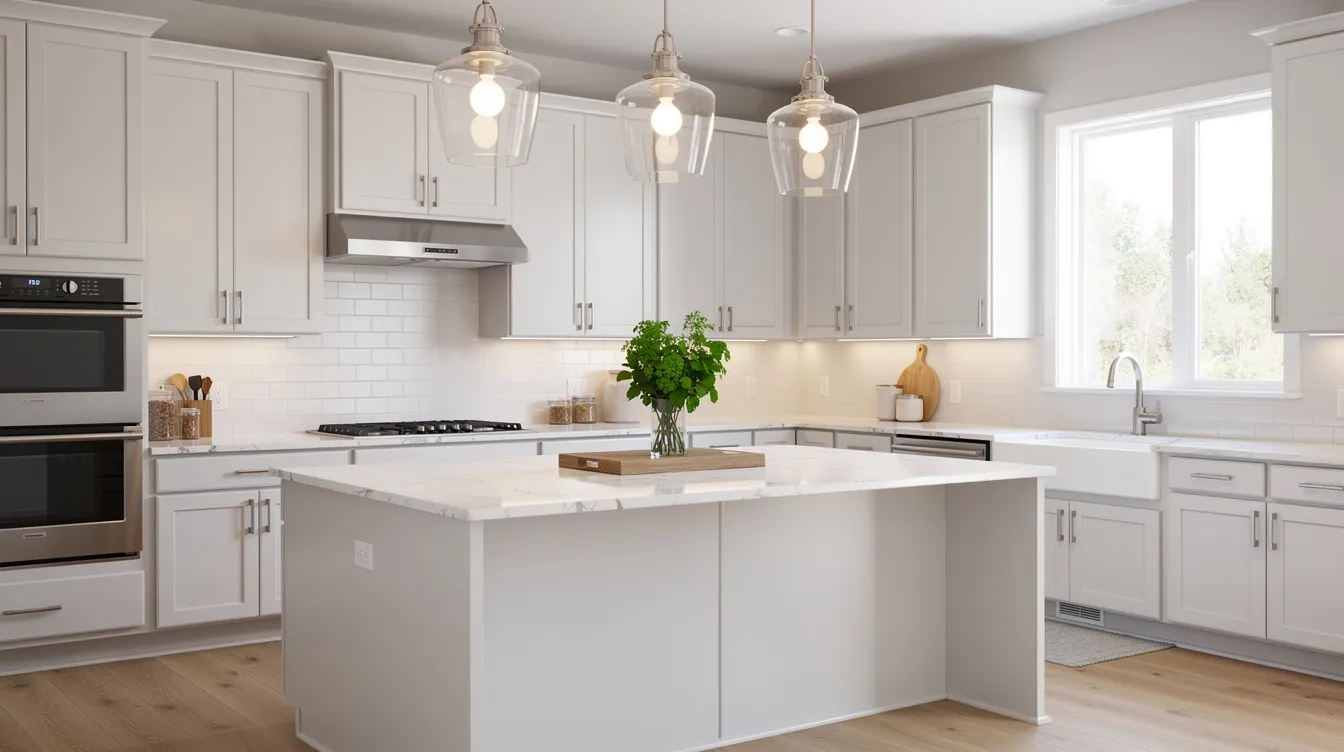
Satin cabinets have a soft glow-no harsh reflections, just a subtle highlight on door edges, rails, and profiles. The painted surface reflects light gently rather than creating a mirror-like bounce.
- Satin works especially well on white cabinets, off-whites, greige, sage, and deep colors like navy or forest green. It creates a furniture-like look that feels intentional.
- In sunny Florida kitchens with big windows, satin keeps glare down while still looking crisp. Natural light hits satin surfaces and diffuses softly rather than bouncing back into your eyes.
- Under-cabinet lighting, pendants, and recessed lights produce a gentle glow on satin rather than the sharp reflections you’d see on glossy cabinets.
Picture satin finish on shaker-style cabinet doors paired with quartz countertops and matte black hardware. That’s the contemporary kitchens look many homeowners are going for.
Advantages of Satin Kitchen Cabinets
- Satin finish hides fingerprints and brush marks well, making it ideal for older cabinets with minor dings, repairs, and visible wood grain.
- Satin is ideal for traditional or farmhouse kitchen designs where you want warmth without excessive shine.
- It reduces visual noise in open floor plans where the entire kitchen is visible from living and dining areas.
- Satin balances a smooth look with easy cleaning when you choose cabinet-grade products rather than standard wall paints.
- Sprayed satin produces an extremely smooth, furniture-like finish on both wood and MDF cabinet doors.
- Sherwin Williams describes satin as suitable for high-traffic applications, balancing durability with a softer appearance when you use a urethane or enamel cabinet product.
Disadvantages of Satin Kitchen Cabinets
- Satin may look “too flat” for homeowners who expect a traditional, slightly shiny surface on their glossy cabinets.
- In very heavy-use family kitchens with frequent greasy splatters near the stove, semi-gloss may still wipe slightly easier over time.
- Cheap satin wall paint is not cabinet paint. You need a dedicated cabinet enamel or waterborne alkyd in satin sheen to get lasting results.
- Ocala Painting Pros tip: Choosing satin is step one. Pairing it with the right cabinet material prep, bonding primer, and topcoat is what makes it last.
What Is Semi-Gloss Finish for Kitchen Cabinets?
Semi-gloss is a higher-sheen, more reflective finish that has long been the traditional choice for trim and cabinets. It reflects noticeably more light than satin, which can make kitchens look brighter and more polished. Semi-gloss finish is still widely used on cabinet doors, frames, and trim in busy, high-traffic kitchens.
Semi-gloss is available in all major cabinet paint lines, including Benjamin Moore Advance and Sherwin Williams urethane trim enamels. Compared to high gloss, semi-gloss is far more forgiving of minor surface flaws while still delivering a reflective quality that reads as clean and crisp.
What Does Semi-Gloss Look Like on Cabinets?
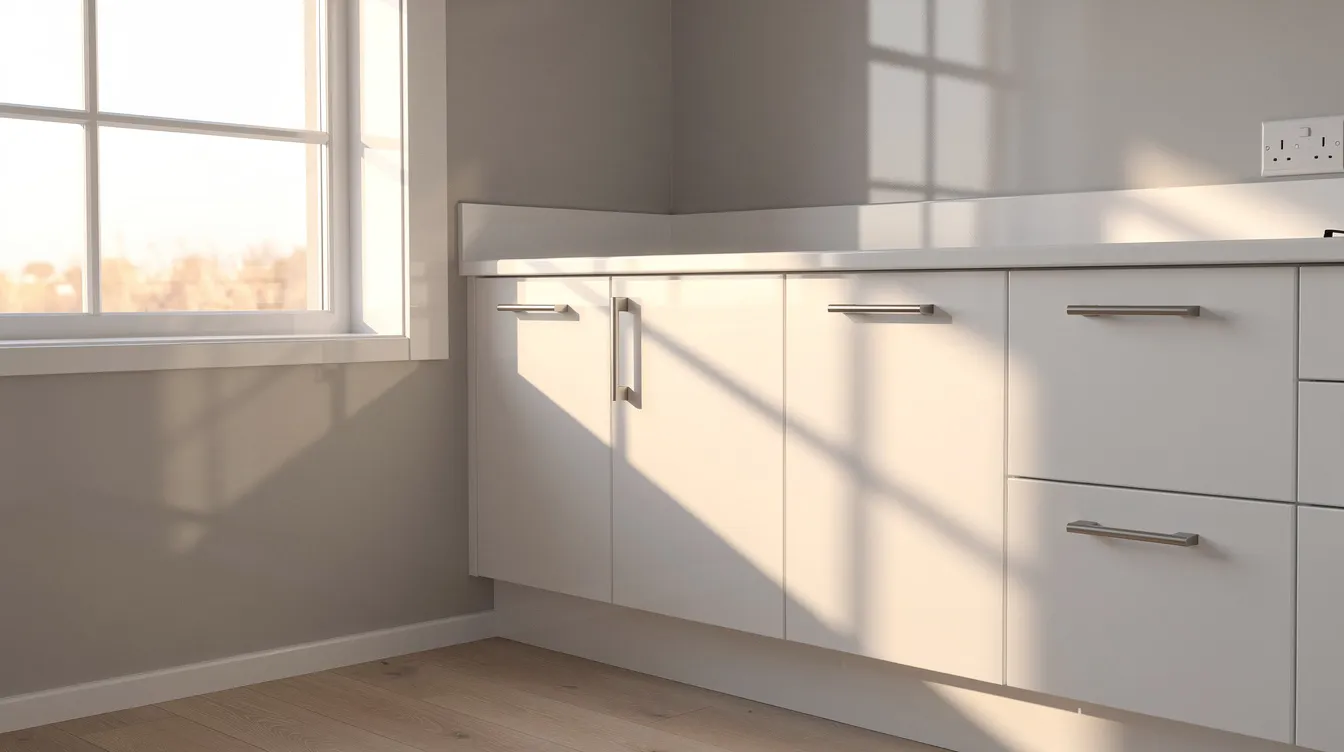
- Semi-gloss cabinets show clear reflections from under-cabinet lights. Door rails, stiles, and profiles have crisper highlights and more visual contrast.
- Semi-gloss can help small kitchens feel brighter by bouncing light around the room. How much light gets reflected depends on the specific product and the number of coats applied.
- On white cabinets, semi-gloss reads very clean and traditional. On darker colors, the shiny surface looks rich but also shows fingerprints more readily.
- Semi-gloss pairs well with classic subway tile, polished stone countertops, and stainless appliances in traditional or transitional kitchens.
Advantages of Semi-Gloss Kitchen Cabinets
- Semi-gloss is highly durable and easy to clean. It offers excellent resistance to repeated wiping and good moisture resistance around sinks and dishwashers.
- Semi-gloss finish is the most popular choice for high-traffic kitchens where grease spots, splatters, and fingerprints need to be wiped off frequently.
- It suits traditional or transitional kitchens where homeowners expect a subtle shine on trim and doors.
- In rental properties or very busy family kitchens, semi-gloss provides a practical, durable finish for longevity.
- Manufacturer guidance from major brands consistently lists semi-gloss as suitable for frequently cleaned surfaces like doors, trim, and cabinets.
Disadvantages of Semi-Gloss Cabinets
- Semi-gloss highlights surface issues: poor sanding, old brush strokes, filler spots, and open wood grain all become more noticeable.
- Roller texture, drips, or lap marks are more obvious in semi-gloss versus satin. Brush marks from amateur application can be especially visible.
- In very bright kitchens, semi-gloss can create harsh glare on large runs of upper cabinets, particularly with south-facing windows common in Florida homes.
- Gloss finishes show every flaw and require perfect prep. This is why Ocala Painting Pros invests significant time in cleaning, degreasing, sanding, filling, and priming before the finish coats go on.
Satin vs. Semi-Gloss Kitchen Cabinets: What’s the Difference?
The main differences between satin and semi-gloss come down to three things: how much light the painted surface reflects, how well each hides surface imperfections, and how easily they wipe clean.
Satin finish typically measures around 20–35 gloss units (GU) at 60°, while semi-gloss usually falls between 35–70 GU. Here’s how they compare across the features that matter most:
Feature | Satin | Semi-Gloss |
|---|---|---|
Shine / Light Reflection | Lower, soft glow | Higher, brighter reflection |
Appearance | Soft, understated, modern | Crisp, polished, traditional |
Cleaning | Easy with quality cabinet paint | Very easy, releases grease faster |
Hides Minor Imperfections | Better-more forgiving | Less forgiving-flaws show |
Modern Kitchens | Excellent | Good |
Traditional Kitchens | Good | Excellent |
High-Use Kitchens | Excellent with proper coating | Excellent |
Surface Prep Importance | Very high | Extremely high |
One critical point: cabinet sheen does not replace paint quality. A premium satin cabinet enamel can outperform a cheap semi-gloss wall paint in durability, adhesion, and appearance.
Both sheens can also be used in the same kitchen. Some homeowners choose satin on perimeter cabinets and semi-gloss on trim or high-splash zones near the sink-using the same paint in different sheens for a cohesive look.
Which Is More Durable: Satin or Semi-Gloss Cabinets?
There’s an old assumption that higher gloss automatically equals better durability. While higher sheen levels do correlate with increased durability, modern cabinet paints have narrowed that gap considerably. Semi-gloss is the most durable cabinet finish, but a well-applied satin from the same product line will be very close behind.
Durability now depends heavily on paint chemistry-waterborne alkyds, urethane-modified enamels, and hybrid formulations-along with how well the cabinets were prepared. Kitchen cabinets endure heavy daily use and require hard-wearing paint regardless of sheen.
Factors that matter more than sheen alone:
- Cleaning and degreasing old kitchen cabinets before painting
- Scuff sanding existing finishes for adhesion
- Filling defects and sanding smooth
- Applying a bonding primer suited to the substrate
- Allowing correct dry time between multiple coats
- Waiting for full cure before normal use
Many manufacturers offer satin and semi-gloss versions of the same cabinet paint with similar hardness once cured. Surface preparation affects the durability and appearance of cabinet paint more than a few gloss units of difference.
Why Paint Quality Matters More Than Sheen Alone
Cabinet enamels, waterborne alkyds, and urethane-modified acrylics are formulated to resist blocking (doors sticking shut), chipping on edges, and yellowing over time. Color retention is an important consideration when choosing cabinet paint, especially for white cabinets in Florida’s strong sunlight.
- Waterborne urethane or hybrid alkyd paints cure harder and resist scuffs better than standard latex wall paints. Products like Benjamin Moore Advance and Sherwin Williams Emerald Urethane are designed to level out and cure to a hard, factory smooth finish.
- Cheap latex wall paint, even in semi-gloss, can feel sticky and chip quickly on high-touch cabinet doors. Using the same paint you’d put on a bedroom wall is one of the most common cabinet painting mistakes.
- Cabinets may feel dry in a day, but the paint dries to full hardness over 2–3 weeks. Advance paint, for example, continues to harden for weeks after application.
Think of it this way: a durable finish comes from the right paint applied on a properly prepped surface-not just from picking a shinier sheen.
Which Finish Is Easier to Clean: Satin or Semi-Gloss?
Both satin and semi-gloss cabinet paints are cleanable, but semi-gloss usually wipes slightly easier, especially with heavy grease. The smoother, slightly harder semi-gloss surface releases dried splatters with less scrubbing.
Common kitchen messes that test your cabinet finish:
- Cooking grease accumulating near the range
- Water splashes by the sink
- Fingerprints around pulls and handles
- Kids’ smudges on lower cabinets
- Pet contact on lower doors and kick panels
High-quality satin cabinet enamels still offer very good washability, particularly when fully cured. Use a microfiber cloth and mild soap for routine cleaning. Avoid abrasive cleaning pads to prevent scratches on either finish. Wipe spills promptly to maintain the cabinet finish over time.
Here’s a practical breakdown by household type:
- Busy family kitchen: Semi-gloss is recommended for busy family kitchens where wipe-downs happen daily.
- Design-forward showcase kitchen: Satin’s softer look may be worth the trade-off in cleaning ease.
- Rental property: Semi-gloss makes sense where constant cleaning between tenants is a priority.
- Older cabinets with visible wear: Satin’s lower reflective quality is more forgiving of remaining imperfections.
Which Finish Hides Cabinet Imperfections Better?
Higher sheen equals more light reflection, and more reflection means uneven surfaces are easier to see. When light hits a semi-gloss door, it bounces back sharply, revealing every ripple and flaw. Satin absorbs light more evenly, diffusing those same imperfections.
Common cabinet imperfections that sheen affects:
- Old dings and scratches
- Patched hinge holes
- Oak grain texture
- Glue lines on edge-banded MDF
- Roller stipple from previous paint jobs
- Prior brush strokes that were never sanded smooth
Satin finish hides these issues noticeably better than semi-gloss, especially on older cabinets. On brand-new, very smooth cabinet material like MDF or maple, the difference is less dramatic, but satin is still more forgiving.
If you don’t plan on extensive sanding or grain filling, choosing satin is usually the safer choice.
Satin Finish on Older Kitchen Cabinets
Satin can visually soften heavy oak grain and older door profiles without emphasizing every pore and ridge. It’s a strong option for 1990s–2000s oak cabinets where homeowners want an updated painted look without full door replacement.
Satin also works well on patched areas where doors have been repaired or hardware holes have been moved. Picture refinishing 20-year-old oak cabinets in satin white-the remaining grain becomes a subtle texture rather than a distracting pattern.
Semi-Gloss Requires Excellent Cabinet Preparation
Semi-gloss will reveal sanding scratches, unfilled nail holes, and uneven priming more than satin. If you want semi-gloss cabinets, expect more time spent on prep to achieve a crisp, professional finish.
The basic professional preparation sequence:
- Degrease all surfaces thoroughly
- Sand or scuff the existing finish
- Repair dings, holes, and damage
- Apply bonding primer
- Sand primer smooth
- Apply finish coats, allowing proper dry time between each
Ocala Painting Pros follows this sequence on every cabinet project, and it’s especially critical when a homeowner requests semi-gloss.
Satin vs. Semi-Gloss for Oak Cabinets
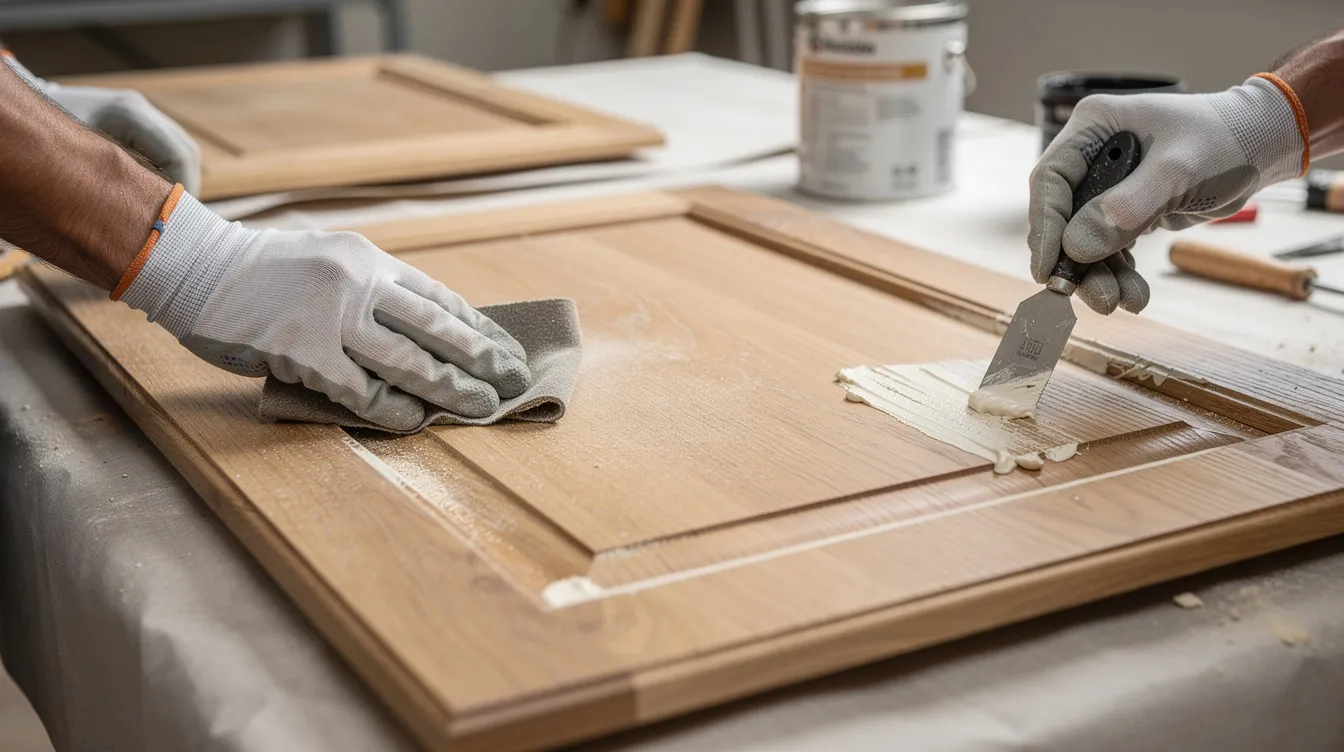
Oak kitchen cabinets have a strong, open grain pattern that interacts heavily with sheen. Semi-gloss on oak will highlight every pore and groove in the wood grain, which can look busy and unrefined unless grain filling and thorough sanding are done first.
Satin finish is the more forgiving default for painted oak cabinets in most homes. The lower light reflection softens the grain’s appearance without hiding the natural character entirely.
Homeowners who want a very smooth, “no grain” look on oak should budget for grain filling-potentially multiple coats of a high-build primer-and then choose satin or semi-gloss based on appearance preferences. Without grain filling, satin is almost always the right paint choice for oak.
Satin vs. Semi-Gloss for White Kitchen Cabinets
Sheen dramatically changes how white cabinets look and feel in a kitchen. The same paint in satin versus semi-gloss can read as two completely different colors under natural light versus artificial light.
Satin white cabinets:
- Calm, contemporary feel with reduced glare
- Pairs beautifully with warm metals (brass, gold hardware) and natural stone
- Won’t compete visually with bold backsplashes or statement lighting
Semi-gloss white cabinets:
- Bright, classic “painted kitchen” appearance
- Reflects daylight generously, making the room feel larger
- Traditional clean-painted look that many homeowners associate with quality
Ocala homeowners should view color samples in their actual kitchen lighting-morning sun versus evening artificial light-before deciding. Better yet, paint test boards in both satin and semi-gloss whites and live with them for a few days before committing to the entire kitchen.
What About Dark Kitchen Cabinets?
Navy, charcoal, black, and deep green cabinets show reflections, fingerprints, and dust more than lighter colors. The darker the cabinet color, the more sheen matters.
- Higher sheens like semi-gloss and high gloss can look dramatic but emphasize every fingerprint and smudge on dark surfaces.
- Satin is a strong option for dark cabinets because it softens reflections while still looking rich. The visual contrast between dark satin cabinets and lighter wall color or countertops can be stunning.
- Dark semi-gloss cabinets work in low-traffic or high-style spaces where owners are willing to wipe frequently.
For two-tone kitchens, consider dark satin on the island with lighter satin or semi-gloss uppers. This combination keeps the dark element manageable while letting the upper cabinets bounce light around the room.
Does Florida Humidity Affect Cabinet Paint Finish?
Central Florida’s heat and humidity create extra challenges for cabinet painting. Kitchens generate even more moisture from cooking, dishwashers, and steam. Moisture and heat resistance is crucial for kitchen cabinet finishes in this climate.
Humidity affects drying and curing times more than it changes which sheen you should choose. According to cabinet painting professionals working in high-humidity climates, cure times can stretch to 3–6 weeks for full hardness in Florida conditions.
- Proper ventilation, air conditioning, and using range hoods help cabinet finishes last longer regardless of sheen.
- Cabinet-grade paints specify minimum temperature and maximum humidity ranges. Pros in Ocala follow these guidelines when scheduling work.
- Keep indoor humidity between 30 and 50 percent during and after painting for the best results.
- Both satin and semi-gloss perform well in Florida humidity when paired with correct prep, primer, and adequate curing time.
Why Cabinet Paint Needs Time to Cure
There’s a big difference between “dry to the touch” and “fully cured.” Paint may feel dry within hours, but full hardness-the kind that resists scratching, blocking, and aggressive cleaning-develops over 7–21 days depending on product and conditions.
- Scrub resistance keeps improving throughout the cure period, which is critical for cabinet doors that get opened dozens of times a day.
- Plan for light use after a few days. Avoid slamming doors, and don’t stack dishes against freshly painted surfaces.
- Wait 2–3 weeks before aggressive cleaning or scrubbing.
- Lightly sand chips and apply touch-up paint as needed once the initial cure period is complete.
- Ocala Painting Pros accounts for this cure time in their project scheduling and provides homeowners with clear guidelines on when to resume normal cleaning.
Should Kitchen Cabinets Be Sprayed or Rolled?
Both spraying and rolling can work for satin and semi-gloss cabinets when done correctly. A paint sprayer often yields the smoothest, most factory-like cabinet paint finish, especially on doors and drawer fronts.
- High-density foam rollers and quality brushes can still produce excellent results for DIY projects if you work in thin, even coats.
- Both satin and semi-gloss can be sprayed or rolled, as long as the specific cabinet paint’s product data sheet allows that application method.
- Pros often spray doors in a controlled spray area and then roll or brush cabinet frames and boxes in place.
Benefits of Spraying Cabinet Doors
- Ultra-smooth surface with minimal texture
- Reduced brush marks and roller stipple
- Faster coverage when painting many doors at once
- More uniform sheen across all gloss finishes
Spray application is particularly helpful for semi-gloss and high gloss finishes where any texture is very visible. Spraying requires careful masking, ventilation, and experience to avoid runs and overspray-this is where a professional finish really stands out.
Ocala Painting Pros typically sprays cabinet doors off-site or in a controlled area to achieve consistent results across every door and drawer front.
Can Satin and Semi-Gloss Both Be Sprayed?
Yes. Both satin and semi-gloss cabinet sheens can be sprayed when the product data sheet allows it. Pros adjust tip size and technique based on the specific formulation-waterborne alkyds and urethane enamels are commonly sprayed for a factory smooth finish on kitchen cabinets.
DIY sprayers should follow manufacturer instructions closely for safety and finish quality. Hiring a pro often saves time and reduces the risk of visible defects, especially with semi-gloss and high gloss where imperfections are magnified.
Is Satin or Semi-Gloss Better for a Modern Kitchen?
Most modern and contemporary kitchens lean toward satin or very low-sheen finishes. Satin complements flat-panel doors, slab fronts, and minimalist hardware by avoiding glare and visual clutter.
Semi-gloss can still work in modern spaces when paired with sleek materials, but it reads a bit more traditional. High gloss is sometimes used in ultra-modern designs-glossy finishes can look spectacular-but high-gloss finishes require meticulous maintenance to avoid showing imperfections.
When choosing sheen for a modern layout, consider how your countertops, backsplash, flooring, and natural light all interact. A satin finish that absorbs light gently often feels more cohesive in open-concept contemporary kitchens than a reflective semi-gloss.
Is Satin or Semi-Gloss Better for Busy Family Kitchens?
Kids, pets, and constant cooking create real wear on cabinets. Semi-gloss is recommended for busy family kitchens where wipe-downs are a daily reality.
- Semi-gloss’s edge in wipe-ability is most helpful on high-touch lower cabinets, trash pull-outs, and surfaces near the range.
- Satin still performs well in busy kitchens when it’s a cabinet-grade enamel, not standard wall paint. Water based paints formulated for cabinets in satin sheen can handle daily cleaning.
- If easy cleaning is your top concern, lean semi-gloss. If appearance and hiding flaws matter more, lean satin.
Ocala Painting Pros evaluates each family’s routine-meal frequency, kids’ ages, pets-before recommending a specific cabinet sheen. There’s no single right answer for every family.
Common Mistakes When Choosing a Kitchen Cabinet Finish
Even with good paint, these mistakes lead to disappointing results:
- Choosing sheen based only on a small paint chip. A 2-inch sample in the store looks nothing like a full run of cabinet doors under your kitchen’s lighting. Always test on a larger sample board in the actual room.
- Using regular wall paint on cabinets. Wall paint-even in the same paint sheen as a cabinet enamel-lacks the hardness, adhesion, and blocking resistance that cabinets demand. Oil based paints were once the standard, but modern cabinet-grade water based paints outperform them without the odor and yellowing.
- Assuming higher gloss automatically means better paint. Semi-gloss is durable, but a poorly prepped semi-gloss job will chip and peel faster than a well-prepped satin job. Gloss finishes are easiest to clean but show imperfections-they’re not automatically “better.”
- Ignoring the condition of existing cabinets. Satin finishes can forgive minor flaws. Jumping to semi-gloss on damaged surfaces without addressing those problems first leads to a shiny spotlight on every defect.
- Skipping degreasing and sanding. Kitchen cabinets collect years of cooking grease. Without thorough degreasing, new paint won’t bond properly to the existing surface. You must prep properly before any topcoat goes on.
- Using the wrong primer. A bonding primer designed for the specific cabinet material (wood, MDF, laminate) ensures adhesion. Generic primer often fails on slick factory finishes.
- Reinstalling cabinet doors too soon. Doors that aren’t fully cured will stick together, block, and damage each other.
- Cleaning fresh paint before it has properly cured. Aggressive scrubbing in the first few weeks can dull or damage either satin or semi-gloss finishes.
- Choosing a finish without testing it in the kitchen’s lighting. Artificial light and natural light affect sheen perception dramatically. What looks perfect under store fluorescents may read entirely different when light hits your south-facing kitchen windows.
How Ocala Painting Pros Chooses the Right Cabinet Finish
Ocala Painting Pros takes a process-driven approach to cabinet painting in Central Florida homes. Rather than defaulting to a single sheen, they evaluate each kitchen individually.
Key factors in the recommendation:
- Cabinet material: oak, maple, MDF, or thermofoil each interact differently with sheen
- Current finish and damage level
- Daily use patterns, including kids, pets, and cooking frequency
- Kitchen lighting, both natural and artificial
- Cabinet color plans-the best sheen for white cabinets may differ from the best sheen for a dark island
The typical professional workflow:
- Inspection and consultation
- Cleaning and degreasing all surfaces
- Repairs to dings, holes, and damaged edges
- Sanding for adhesion
- Bonding primer application
- Sanding primer smooth
- Cabinet-grade finish coats (satin or semi-gloss)
- Drying and curing period
- Reassembly and final inspection
The goal is guiding homeowners through the satin vs. semi-gloss decision rather than forcing a one-size-fits-all answer.
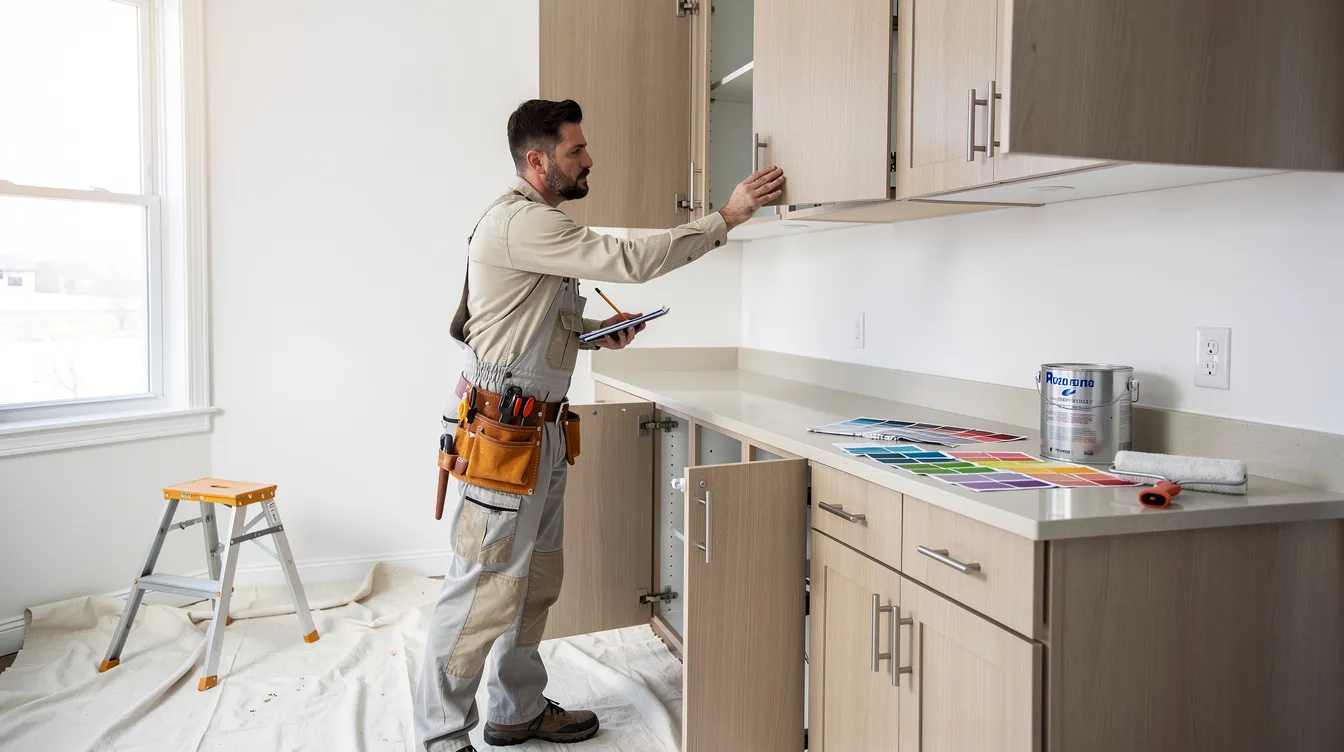
Satin vs. Semi-Gloss Kitchen Cabinets: Frequently Asked Questions
Below are concise answers to the most common questions homeowners ask when choosing between satin and semi-gloss for their kitchen cabinets.
Is satin or semi-gloss better for kitchen cabinets?
Both are good choices. Satin is better for hiding small flaws and creating a softer, modern look. Semi-gloss is slightly easier to wipe clean in very busy kitchens. The “better” choice depends on your cabinet condition, lighting, and cleaning habits-test both sheens on sample boards before committing.
What sheen do professional painters use most on kitchen cabinets?
Many pros default to satin or a low-sheen enamel for most cabinet projects unless a client specifically requests semi-gloss or high gloss. According to industry sources, satin is used in roughly 95% of real-world cabinet projects. The exact product line matters more than micro-differences in sheen.
Can I mix sheens on my kitchen cabinets?
Yes. Some homeowners use satin on perimeter cabinets with semi-gloss on an island, or satin cabinets with semi-gloss trim. Mixing sheens should be intentional and tested under your kitchen’s actual lighting to avoid jarring contrasts. Ocala Painting Pros can help plan mixed-sheen schemes that still feel cohesive.
Does high-gloss ever make sense for kitchen cabinets?
High gloss can be stunning in ultra-modern kitchens with perfectly flat doors and professional spray work. However, it shows every imperfection and fingerprint, so it isn’t ideal for older cabinets or busy family spaces. Most Ocala homeowners are happier long-term with satin or semi-gloss unless they’re prepared for high-maintenance gloss cabinets.
How long should I wait before using and cleaning freshly painted cabinets?
Plan for light use after a few days-gently opening doors without slamming. Wait roughly 2–3 weeks before scrubbing or using strong cleaners, as the paint continues hardening during this period. Ocala Painting Pros provides product-specific curing guidance so homeowners know exactly when their satin or semi-gloss finish is ready for normal kitchen life.
Satin or Semi-Gloss: Which Should You Choose?
Choose satin when you want a softer, lower-reflection, modern look and some forgiveness for minor cabinet imperfections. Satin finish hides fingerprints better than semi-gloss and creates a calm, furniture-like appearance.
Choose semi-gloss when you prefer more shine, a classic painted-cabinet appearance, and prioritize quick wipe-downs in a busy kitchen. Semi-gloss is highly durable and easy to clean, making it a practical choice for resisting moisture, grease, and daily wear.
Sheen is only one part of the equation. Proper degreasing, sanding, priming, and using a true cabinet-grade enamel are equally critical to a smooth finish that lasts. Don’t stress over the decision-both sheens perform beautifully in a well-prepped, well-painted kitchen.
The right paint and the right preparation will always matter more than a few gloss units of difference.
Get Professional Kitchen Cabinet Painting in Ocala, FL
If you’re ready to update your kitchen without replacing your cabinets, you don’t have to figure it out from a tiny paint chip.
Ocala Painting Pros can evaluate your existing cabinets, kitchen lighting, cabinet material, desired color, and everyday use to help you select the right finish for your home. From detailed surface preparation and priming to professional cabinet painting and finishing, the goal is a smooth, durable result designed for real-world kitchen use in Central Florida’s climate.
Ready to transform your kitchen? Contact Ocala Painting Pros today to request an estimate for professional cabinet painting in Ocala, Florida.